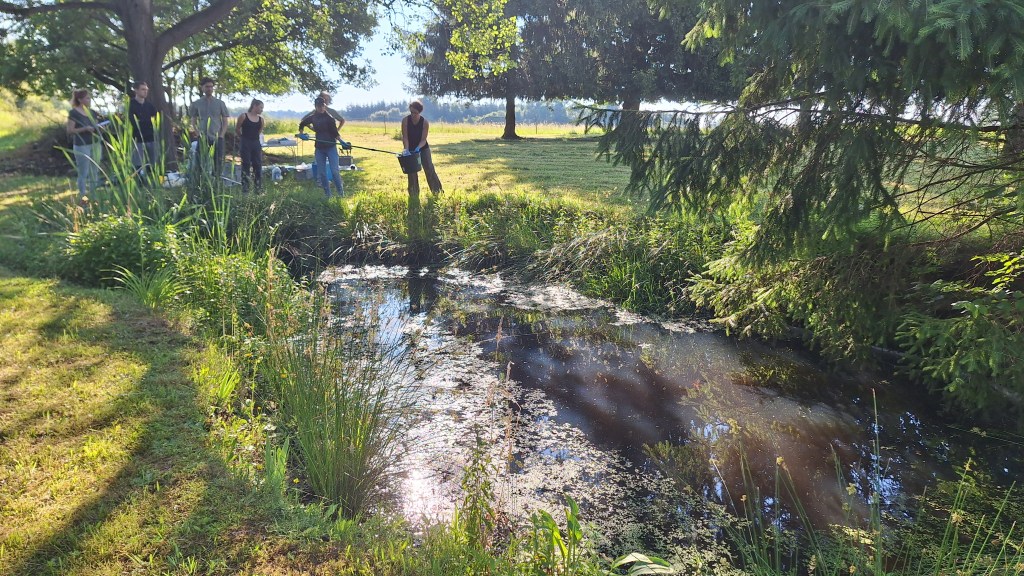
TRANSPONDER – Transnational biodiversity and ecosystem assessment approaches for pondscapes in Europe
2024 – 2027
A consortial BIODIVERSA+ grant co-financed by the National Research, Development and Innovation Office (NKFIH).
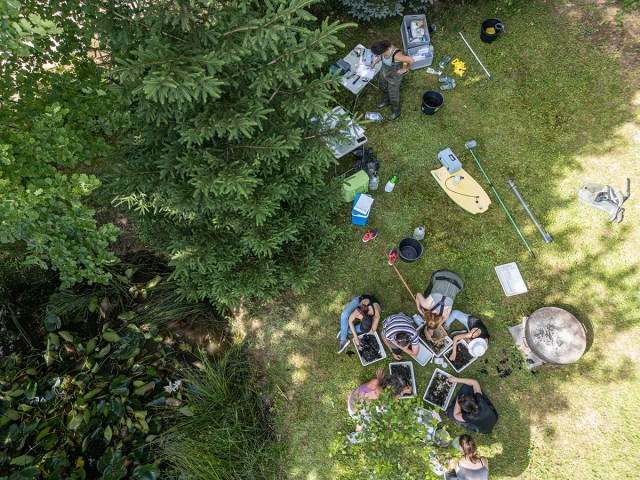
Understanding the role of ponds and their networks in supporting aquatic and terrestrial biodiversity in the urban landscape
2024 – 2027
A new standalone grant (FK OTKA) financed by the National Research, Development and Innovation Office (NKFIH).
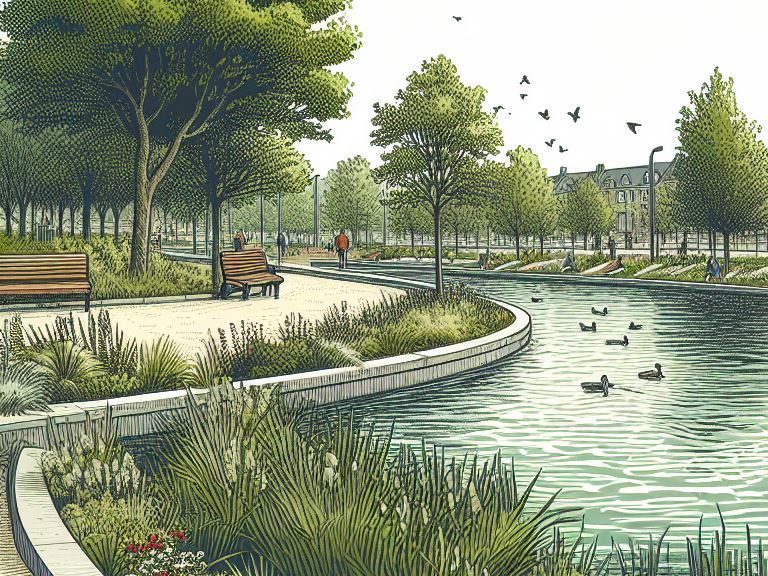
Meta-Heroes: Metacommunities and the role of habitat networks in safeguarding against biodiversity loss under fragmentation and environmental stress
2023 – 2025
Marie Skłodowska-Curie Actions (MSCA) Postdoctoral project of David Cunillera-Montcusí (HORIZON-MSCA-2021-PF-01-01).
The central aim of Meta Heroes is to understand the consequences and interaction of connectivity loss and salinity as a local stressor for biodiversity in habitat networks and to assess the role of connectivity in maintaining community resistance against disturbances, thereby contributing to long-term biodiversity conservation in the landscape. We combine empirical data analysis, simulations, and a mesocosm experiment run in a real pond network (Apaj bomb crater ponds) to achieve these aims.
More details on David’s own web page: https://www.dcm.cat/?page_id=936

National Multidisciplinary Laboratory for Climate Change
2022 – 2026
NKFIH financed National Multidisciplinary Laboratory for Climate Change consortial project, where we study the responses of aquatic systems to climate change, with the help of innovative experiments and long-term studies.
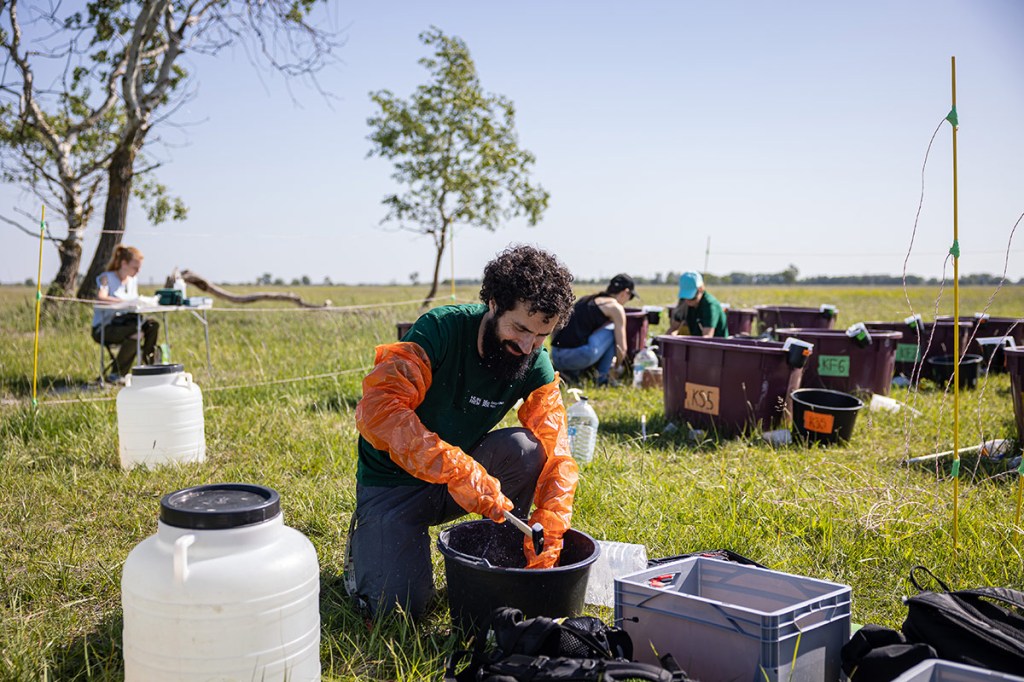
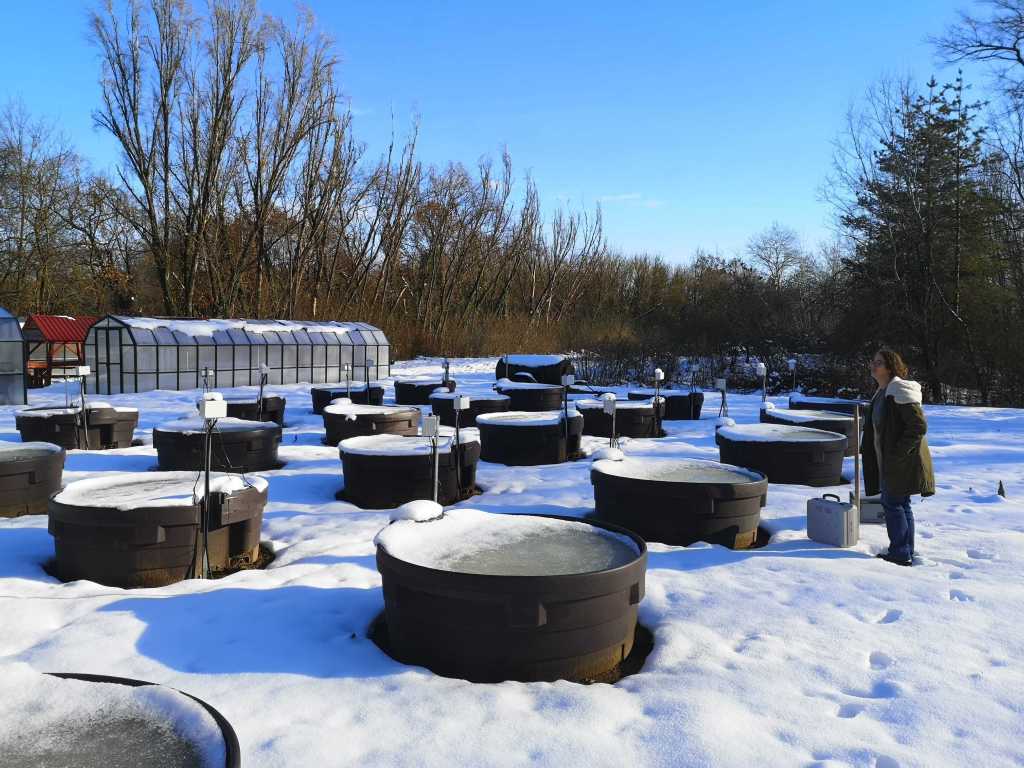
Using simplified experimental ecosystems (micro- and mesocosms), our goal is to investigate how ecological systems react to the effects of climate change and the related environmental stressors, including urbanization and invasive species. In addition to our short- and long-term experimental studies, we also launch long-term programs to contribute to the monitoring of prominent shallow lakes (e.g., Lake Velencei) under climate change.
We will develop and maintain our modern experimental systems, establishing long-term options for climate change research. The Hungarian Pond Network (Magyar Kísérletes Tóhálózat), developed as part of AQUACOSM-plus, shares strong ties to the existing four Spanish and two Portuguese sites of the Iberian Pond Network. We will capitalize on these ten sites across three European countries to develop a long-term joint climate change experiment on a European scale.
MyPond and MICROcosm below are also supported by this project.
In-house collaborators: Tamás Felföldi, Balázs András Lukács, Csaba Vad.
MyPond: Az én kistavam
2021-2026
In this citizen science program, we are mapping urban pond biodiversity in Hungary with the help of volunteering garden pond owners.
We combine environmental DNA-based methods and a citizen science approach.
Results of the project:
Hamer, A.J., Barta, B., Marton, Z., Vad, C.F., Szabo, B., Tornero, I. & Horvath, Z., 2024. Patterns and correlates in the distribution, design and management of garden ponds along an urban-rural gradient. Urban Ecosystems pdf
Activities have been supported by Eötvös Loránd Research Network (ELKH, now HUN-REN) in 2021, the National Multidisciplinary Laboratory for Climate Change (NKFIH) between 2022-2026 and the Sustainable Development and Technologies National Programme MTA.
MICROcosm: a global microcosm experiment
2021 – 2022
This global experiment is coordinated by Gustavo Romero (UNICAMP, Brazil) and Martin Gossner (Swiss Federal Institute for Forest, Snow and Landscape Research WSL, Switzerland) to to assess human impacts on forest ecosystems using experimental microcosms.
The main question of the global experiment is how current and future climatic conditions, forest habitat degradation and management influence biodiversity and ecosystem functioning in
water filled microcosms worldwide.
In addition, we run a spinoff experiment together with Jana Petermann (University of Salzburg, Austria) and Pavel Kratina (Queen Mary University of London, UK) in Hungary, Austria and UK to test for the effect of connectivity.
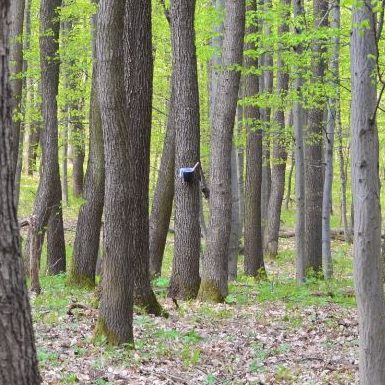
Our participation is supported by the NKFIH financed National Multidisciplinary Laboratory for Climate Change and led by Barbara Barta as part of her PhD.
AQUACOSM-plus: Network of Leading Ecosystem Scale Experimental AQUAtic MesoCOSM Facilities Connecting Rivers, Lakes, Estuaries and Oceans in Europe and beyond
2020 – 2024
This Horizon 2020 consortium of 30 partner institutes is led by Jens Nejstgaard (FVB-IGB) as the main PI.
PIs from our institute: Csaba Vad, Zsófia Horváth
This project fosters collaborative research, development of new technologies in mesocosm research and addressing grand challenges in aquatic ecology. The project has a strong emphasis on knowledge transfer and capacity building via symposia, expert summits, transnational access to research infrastructure, and open workshops, with the aim of co-designing future aquatic research actions.
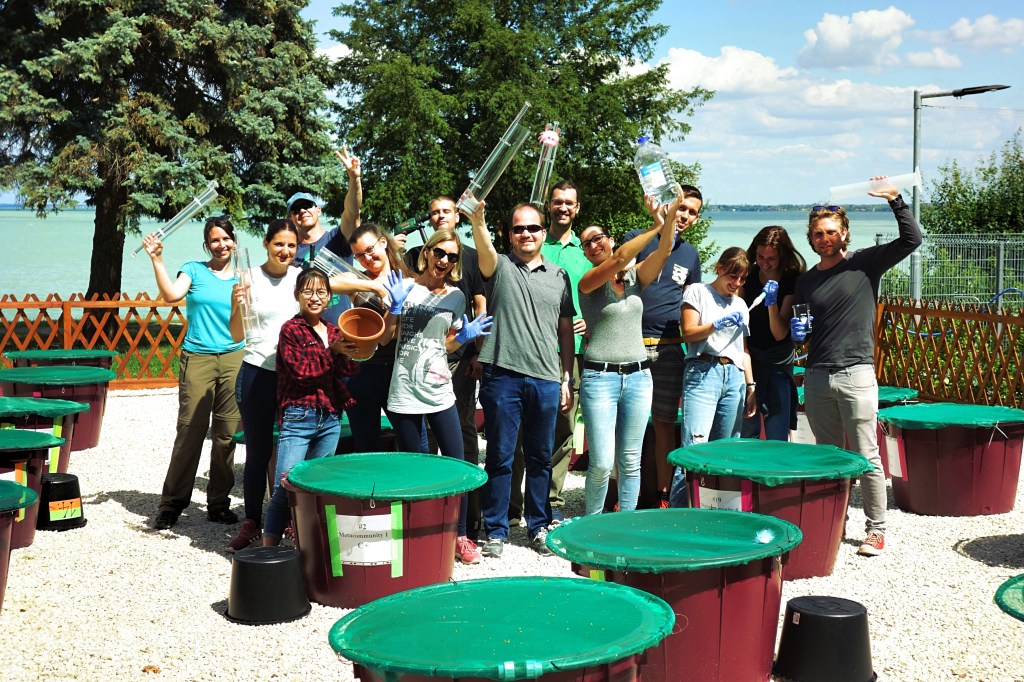
We also had a Transnational Access opportunity in 2023, when 10 researchers from 6 countries joined our mesocosm experiment.
CLOSER – Effect of connectivity loss on biodiversity in experimental metacommunities
2019 – 2024
This is my first standalone project in Hungary, financed by the National Research, Development and Innovation Office (NKFIH).
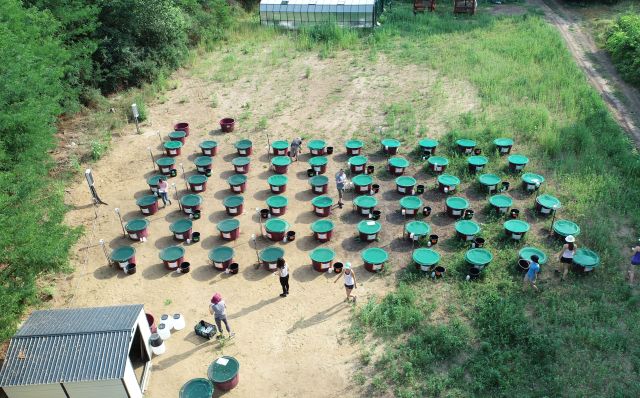
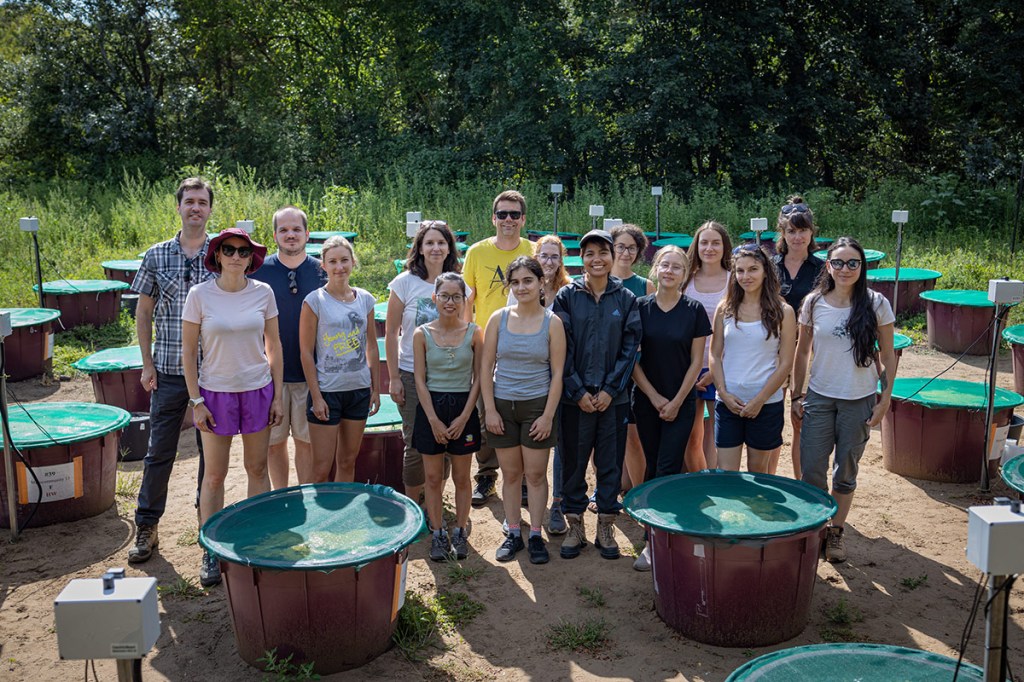
The aim of this project is to better understand the relative role of habitat and connectivity loss in explaining local and regional biodiversity loss in metacommunities, and their interaction with an important aspect of climate change, heatwaves. We carry out experiments using plankton metacommunities in mesocosms modeling pond networks. We test the effect of fragmentation and also combine its effect with the pulse disturbance from heatwaves to seek a better understanding of the impacts of the Anthropocene on local and regional biodiversity.
SODAphnia – Eco-evolutionary dynamics in unique ecosystems: sodic waters
2018 – 2022
This project is financed by FWO (Belgium), which started as a collaboration between KU Leuven and WasserCluster Lunz, led by Luc De Meester. Co-PIs: Zsófia Horváth, Csaba Vad and Robert Ptacnik.
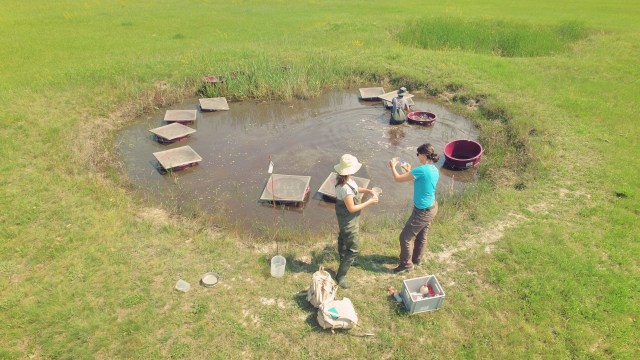
In the project, we aimed at identifying the impact of local genetic adaptation on landscape genetics, (meta)community structure, and ecosystem characteristics. With the help of Daphnia magna as our model species, we carried out field transplant and common gardening experiments along the natural salinity gradient of soda pans and sodic bomb crater ponds in Austria and Hungary. Due to my move, I continued my involvement in the project from Hungary, as a guest researcher at KU Leuven.
Results of the project:
*Brans, K. I., *Vad, C. F., *Horváth, Z., Santy, L., Cuypers, K., Ptacnik, R., & De Meester, L. 2024. Regional and fine-scale local adaptation in salinity tolerance in Daphnia inhabiting contrasting clusters of inland saline waters. Proceedings of the Royal Society B: Biological Sciences 291: 20231917 pdf *equal contribution
Horváth Z., Haileselasie T.H., Vad C.F., Ptacnik R. & De Meester L. 2025. Parallels and divergences in landscape genetic and metacommunity patterns in zooplankton inhabiting soda pans. Oikos 2025(4): e10887 pdf
Project page at KU Leuven: https://www.kuleuven.be/onderzoek/portaal/#/projecten/3E180139?hl=en&lang=en
Vogelwarte Madárvárta 2 – Grenzüberschreitende Koordination der ökologischen Monitoringaktivitäten in den NATURA 2000 Gebieten der Neusiedler-See und Hanság
2017 – 2020
This project was financed by the INTERREG V-A AT-HU 2014-2020 call of the European Union, as a cooperation between Fertő-Hanság (Hungary), and Neusiedler See – Seewinkel National Parks (Austria), Biological Station Neusiedler See (AT) and WasserCluster Lunz, with Fertő-Hanság NP as the Lead Partner.
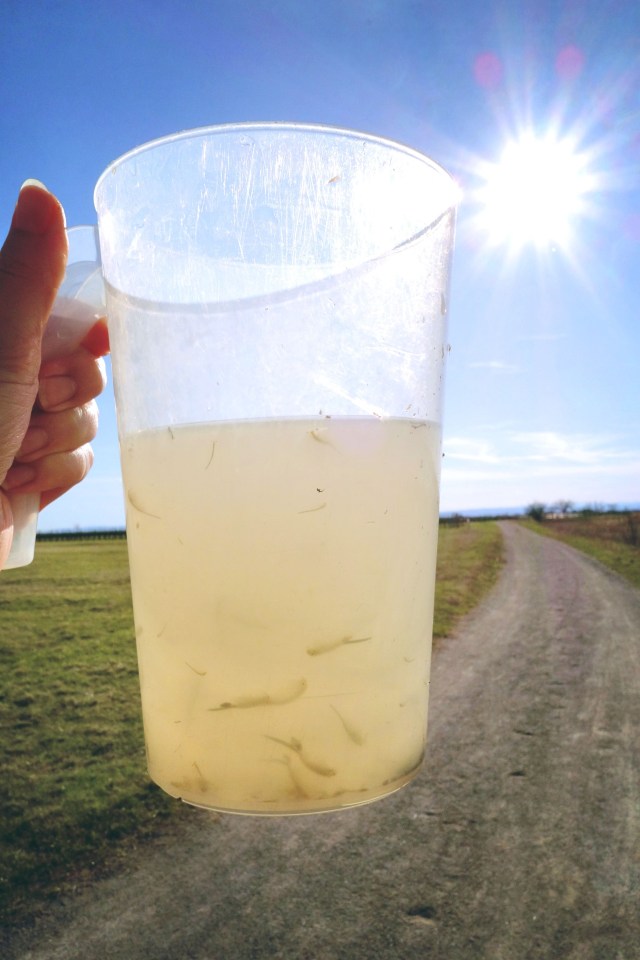
This was a trans-boundary Interreg project between Austria and Hungary, where the project partners cooperated in monitoring protected areas and species and carry out research serving as a basis for management and habitat restoration. This project did not move with me, rather I left a foot at WasserCluster to finish it in the last project year. Together with Dunja Lukić and Robert Ptacnik, we have been working on:
– feeding ecology of fairy shrimps and the role of environment in explaining diet shift (experiments, stable isotopes),
– phylogeography of fairy shrimps (congeneric Branchinecta species across the Palearctic – collaboration with Tom Pinceel at KU Leuven),
– role of waterbirds in aquatic dispersal (metabarcoding of bird droppings and natural plankton communities), and
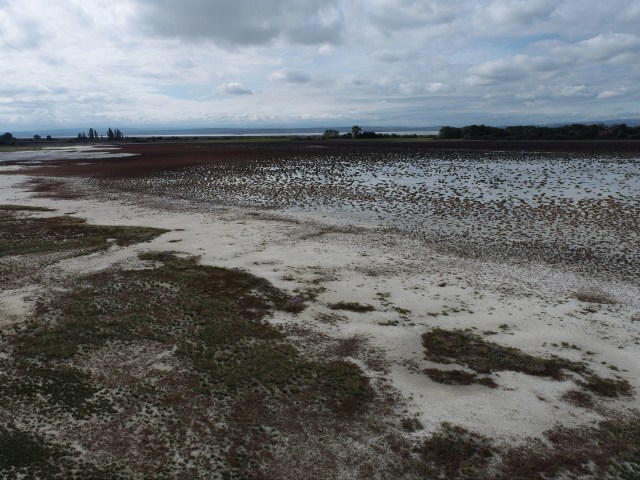
– habitat loss in soda pans.
Project page: https://interreg-athu.eu/en/current-projects/so22-nature-protection/#dce-accordion-content-1887
Project page at WasserCluster Lunz: https://aquascalelab.wordpress.com/projects/vogelwarte2/
sTURN – Does time drive space? Building a mechanistic linkage between spatial and temporal turnover in metacommunities
2017 – 2019
sTURN was our working group at the Synthesis Centre of Biodiversity Sciences (sDiv) in Leipzig, funded by DFG, that I was co-leading with Robert Ptacnik.

With this international group of metacommunity ecologists, we worked on a synthesis for spatio-temporal patterns in metacommunities, aiming to understand the general scaling relationships underlying spatio-temporal turnover in the classical metacommunity archetypes and beyond. This is another project that received funding when I was still at WasserCluster, and we kept working on it after my move.
The first paper by Patrick Thompson has been published in Ecology Letters.
The second paper by Melissa Guzman has been published in Ecology
Project page with the full list of participants: https://www.idiv.de/sturn.html
Project page at WasserCluster Lunz: https://aquascalelab.wordpress.com/projects/sturn/
 Lab of Zsófia Horváth